Responsibility
The decision, question or process that has to run better, stated precisely enough to build against and to measure afterwards.
Software on its own does not fix a finance operation. We learn how yours runs, build the foundation, put it to work, and stay.
The first weeks go into your finance function rather than our product: what gets decided, who decides it, and where the process breaks today.
The decision, question or process that has to run better, stated precisely enough to build against and to measure afterwards.
Who prepares, who reviews, who approves, and the points where work currently changes hands or waits on someone.
The ERP, banking, billing and spreadsheet records behind the work, with their update rhythm and their known weak spots.
What the business already means by entity, period, margin and exposure, captured before anything gets reconciled against it.
Close calendars, audit requirements, data residency and the controls that are not going to move to accommodate a vendor.
An honest read on which sources can carry the work today and which need attention first, given before scope is agreed.
Everything above this layer depends on it being right, so it is built once, reviewed line by line with finance, and then reused by every workspace that follows.
| Layer | What gets established | Agreed with |
|---|---|---|
| Entity structure | Legal entities, groupings, intercompany relationships and the path from each one to a consolidated view. | Group finance |
| Chart of accounts | Account mappings from every source system, normalised into a single reporting structure. | Financial control |
| Currency | Functional currency per entity, the rate source, and the basis used to translate into the group reporting currency. | Treasury |
| Calendar | Periods, close dates and the cut-offs that decide which month a movement lands in. | Financial control |
| Reconciliation | The rules that match bank movement to ledger entry, and what gets raised as an exception when they disagree. | Financial control |
| Access | Who can see which entity, what can leave the platform, and which actions are written to the audit record. | Security and IT |
Nothing is written back without approval. Your source systems stay authoritative. Stratiri reads, models and explains; a proposed action reaches a source system only after a named finance person approves it.
The definitions stay yours. Where the business already has an agreed definition we adopt it. Where two systems disagree, the conflict is surfaced rather than quietly resolved in our favour.
A workspace nobody opens is a failed project. The first release is scoped around work the team already has to do, with review built in.
The first workspace covers a responsibility already on someone’s plate, so using it replaces effort instead of adding to it.
Where a number needs a second pair of eyes, the review sits inside the workspace rather than in a separate thread of email.
Every exception has a name against it, and the follow-up stays attached to the record that raised it.
The team learns on their own entities and their own period, not on a demonstration tenant with tidy data.
The strongest work combines your knowledge of the operation with our product, data and delivery capability. Neither side reaches a useful result alone.
The platform, the data model and the design of each working surface.
From source assessment through to a working capability running in production.
Changes to views, workflow and shared context as the operation moves.
What matters, how the work actually happens and where it breaks today.
Accounting policy, approval boundaries and what the business counts as correct.
Which responsibility comes next, and when a change is worth making.
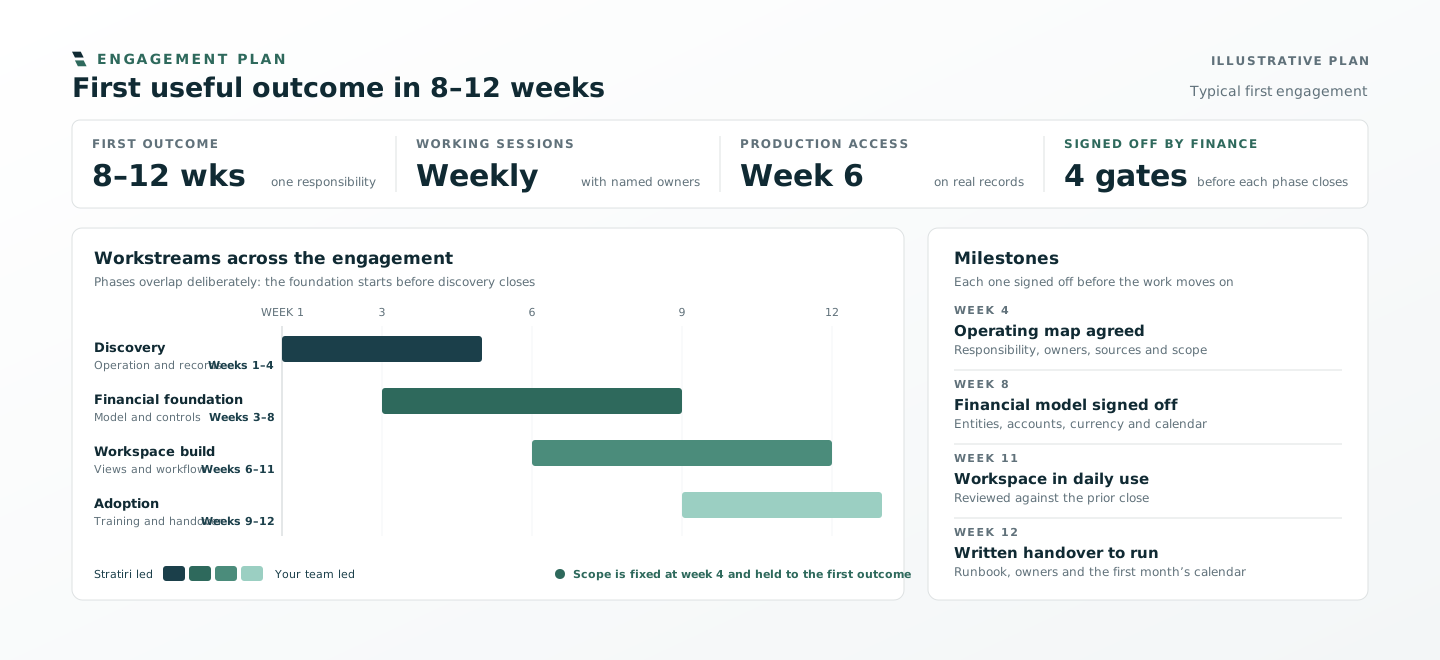
Below is the shape of a typical first engagement. Scope is agreed with finance up front, then adjusted against what the underlying records can genuinely support.
What runs alongside