Consolidated position
Every entity, bank and currency in one view, held in native currency or translated into a single reporting currency.
Reconcile cash. Explain variance. Measure exposure. Five modules. One set of records.
Consolidated balances across every entity, bank and currency, reconciled to the ledger. Then the part a balance cannot tell you: when the open items will actually settle.
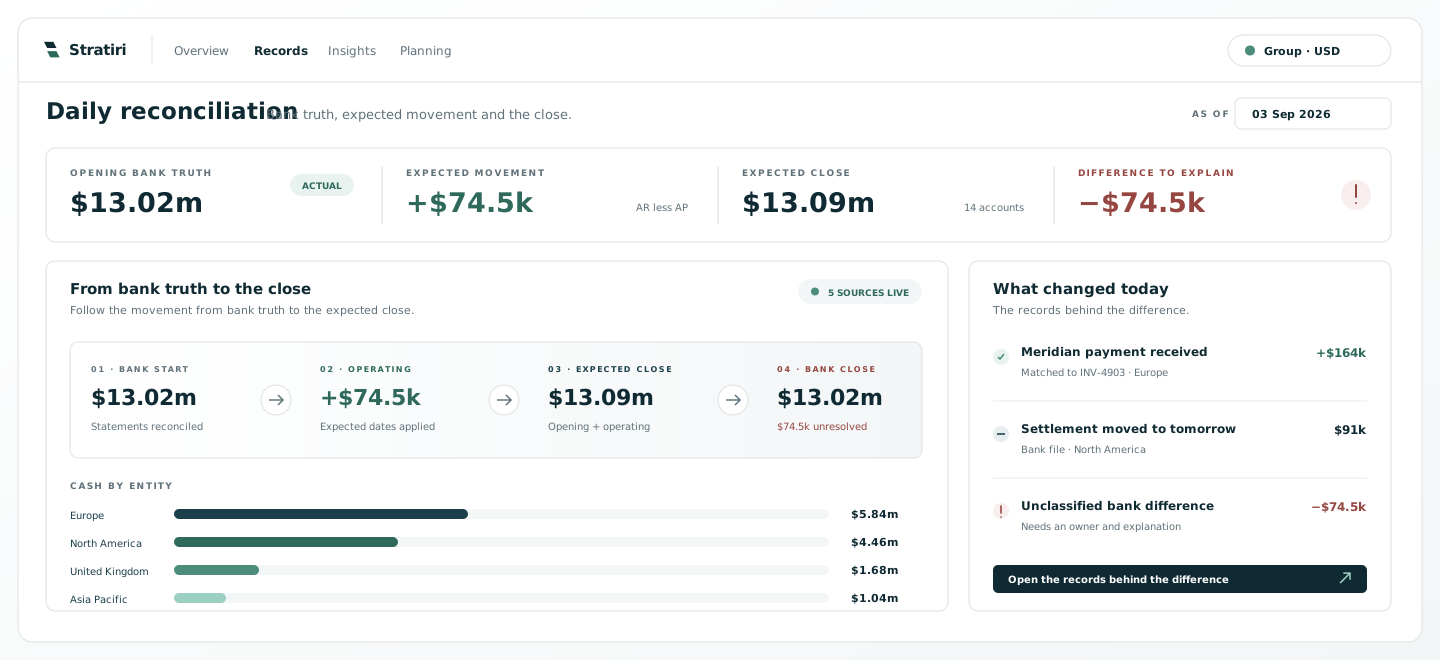
Every entity, bank and currency in one view, held in native currency or translated into a single reporting currency.
Bank movements matched against ledger entries. What does not match is raised as an exception, with the records that caused it attached.
Receipts applied to invoices, and open items aged by customer, supplier and entity rather than by document date alone.
Expected payment dates built from how each counterparty has actually paid, not from the contractual terms printed on the invoice.
Balances held above what an account operationally needs, flagged with the yield currently being given up on them.
Liquidity headroom under a base case and a stressed case, with the assumptions behind each one stated on the view itself.
Also covers
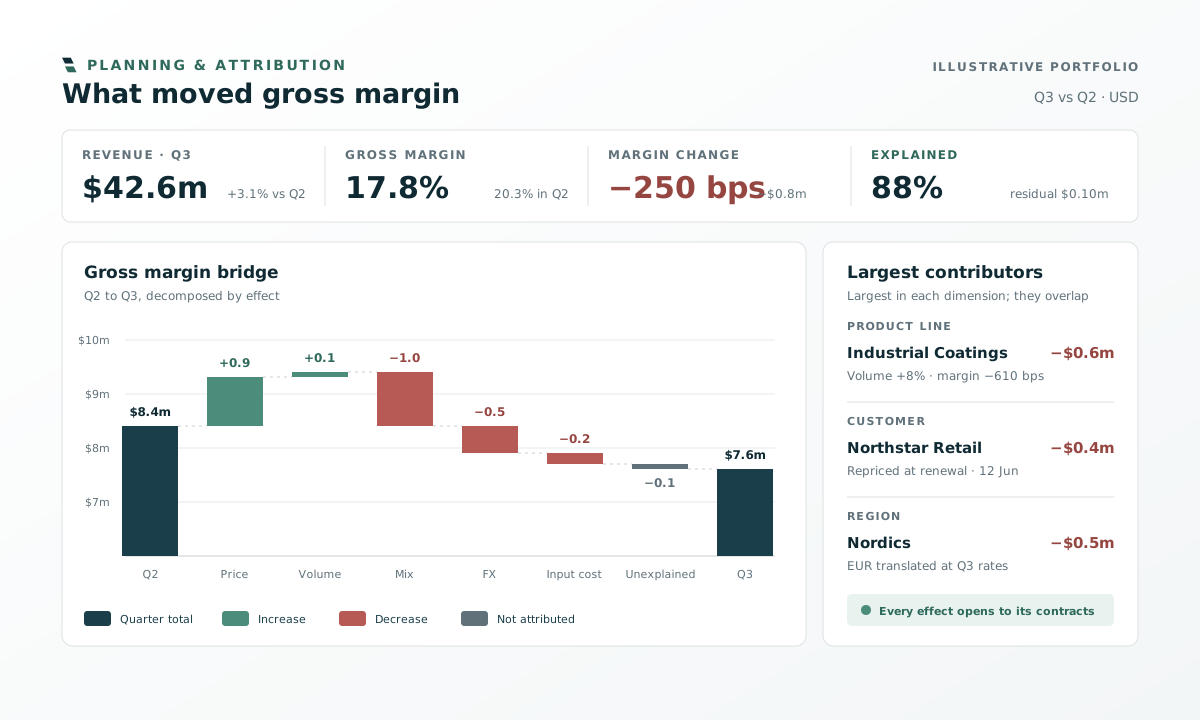
Attribution decomposes a movement into the effects that caused it, ranks them by size, and leaves the unexplained remainder visible instead of absorbing it into the effects that can be measured.
Also covers
Opening to closing decomposed into price, volume, mix, currency and cost, with every step opening to the records beneath it.
The factors behind a movement separated and ordered by size, so the explanation starts with the one that actually matters.
The share of a movement the model cannot account for is reported as its own number, not spread across the effects that can be.
Change an assumption and follow it through revenue, margin, working capital and closing cash without rebuilding the model.
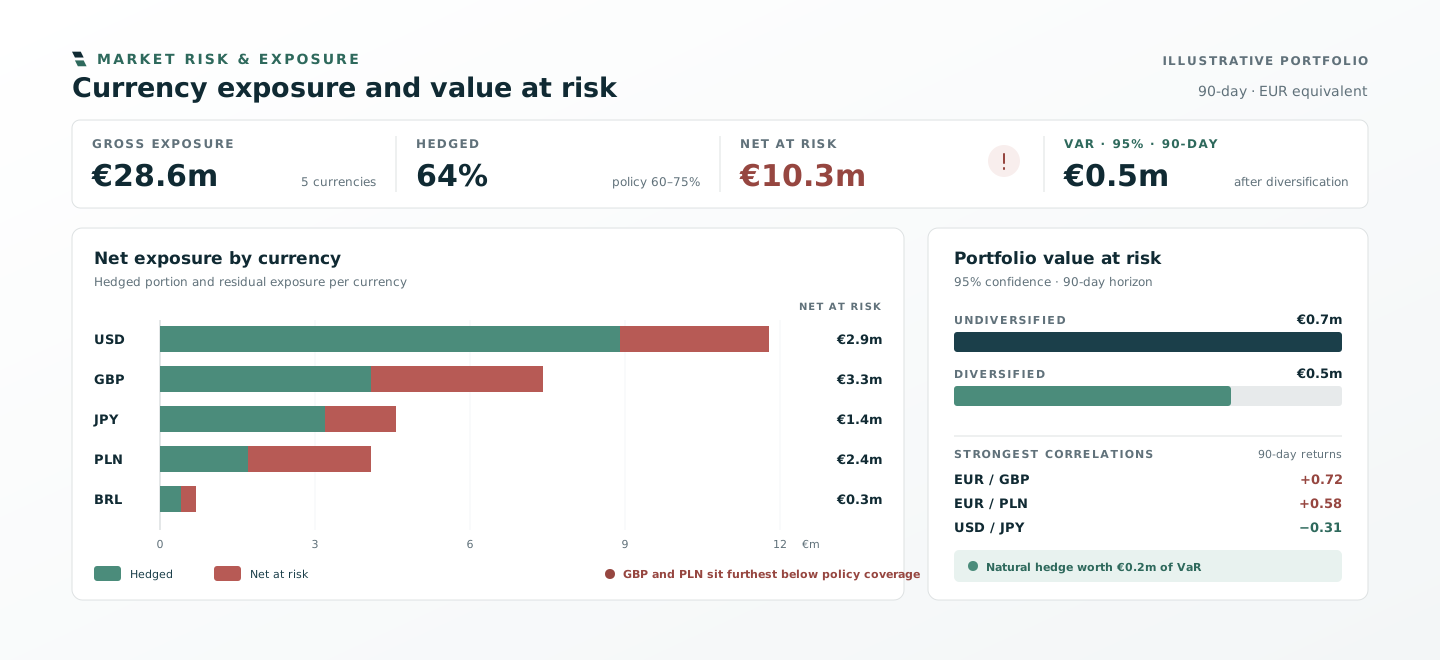
Institutional risk method applied to a corporate balance sheet: exposure by currency measured against policy, portfolio value at risk with cross-currency correlation, and rate shocks run against the actual debt book.
Net exposure by currency and entity, before and after hedging, measured against the coverage your policy actually requires.
Portfolio VaR on a variance-covariance basis, with the diversification benefit already sitting in the book quantified separately.
Cross-currency correlation over a rolling window, showing which exposures offset one another and which compound.
Floating debt, hedge coverage and refinancing dates modelled against benchmark shocks and curve movements.
Positions run against defined shocks and historical episodes, with the result expressed per entity and per currency.
Compare a proposed hedge against doing nothing: cost, residual exposure, and the effect on reported earnings.
Also covers
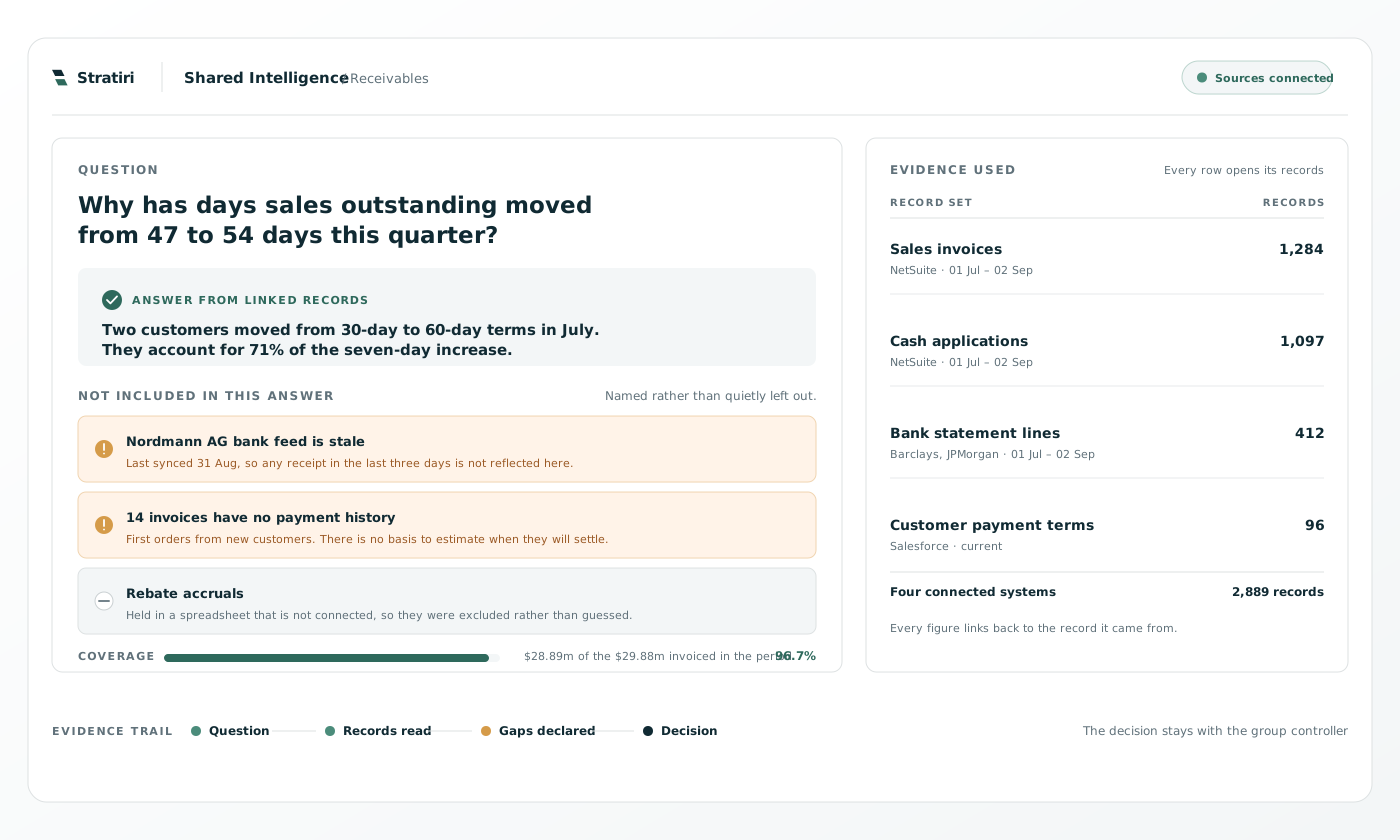
Shared Intelligence answers from your records and nothing else. It states the evidence it used, names what it could not find, and leaves the decision with the person accountable for it.
Also covers
Ask about the business in the terms finance already uses. The question runs against your records, not against a general model of the world.
Each number links back to the entity, account, invoice or transaction it came from. Nothing is asserted without a route back.
Where the records are incomplete the answer says so, rather than estimating across the gap and presenting the result as fact.
An answer can become assigned work with a named owner and an approval step. Nothing reaches a source system without review.
Stratiri connects to the records where they live. Nothing is migrated away, and the source system stays authoritative throughout.
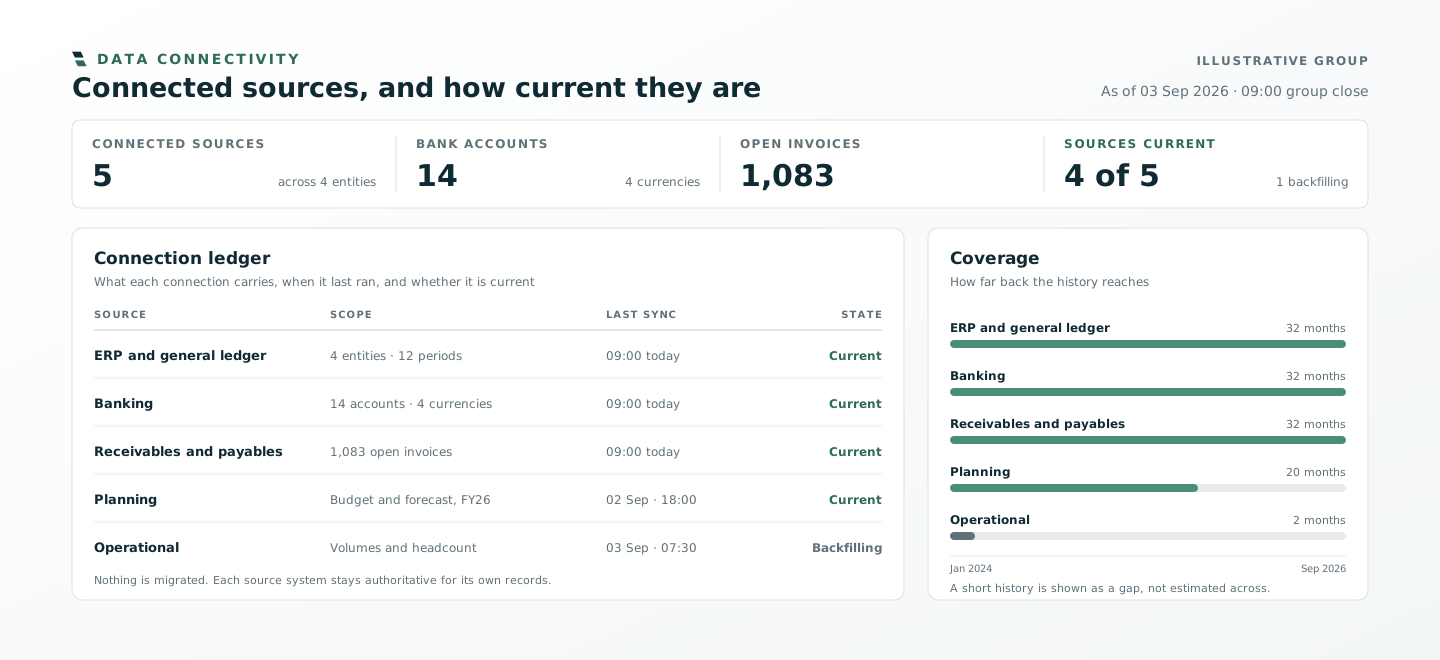
Providers and API sources configured per entity, each with its own credentials and its own sync schedule rather than one shared account.
What every connection imports, when it last ran and whether it is current, kept in one list instead of in the memory of whoever set it up.
How far back the history reaches for each account and source, so a gap is visible before it reaches an analysis rather than after.
Anything without a connector is mapped and validated against the maintained schema before it lands, and the import history is kept.
Tag observed values with your own categories without editing anything in the source. The classification is yours; the record stays theirs.
Credentials are held per connection and scoped to what that connection reads, rather than shared across every source in the group.
| Source | Systems | What Stratiri reads |
|---|---|---|
| ERP and general ledger | NetSuite, SAP, Dynamics 365, Xero | Chart of accounts, journals, entities, periods |
| Banking | EBICS, SWIFT MT940, open-banking feeds | Balances, statement lines, value dates |
| Receivables and payables | Ledger sub-modules, billing and payment platforms | Invoices, credit notes, settlements, terms |
| Planning | FP&A tools and spreadsheet models | Budgets, forecasts, scenario assumptions |
| Operational | Warehouse, CRM, job and project systems | Volumes, jobs, headcount, non-financial drivers |
Anything without a connector arrives over a documented REST API, webhooks or scheduled file transfer. Read the API contract
Encrypted in transit and at rest, tenant isolation enforced at the database layer, with authentication, permission changes, exports and approvals logged. Review the controls
Also covers